Loading
Loading
ACTH(4-7) analogue · BDNF / NGF upregulation · Intranasal
Synthetic ACTH(4-7) analogue; increases brain-derived neurotrophic factor (BDNF) and nerve growth factor (NGF), modulates dopaminergic and serotonergic transmission, and enhances cognitive function and neuroprotection in rodent and limited human studies.
Overview
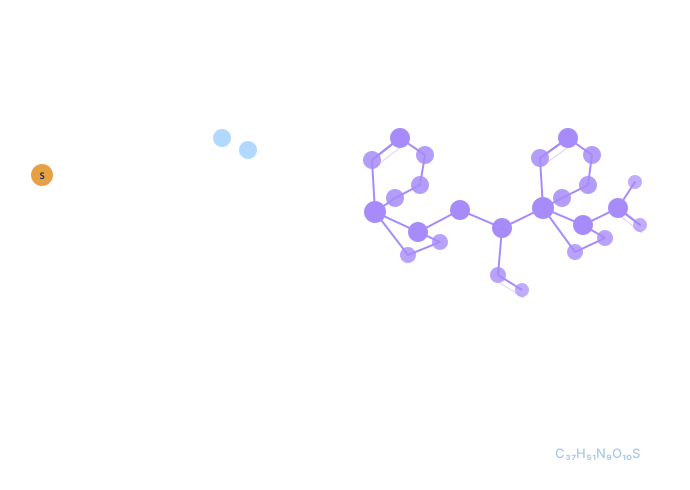
Semax is a synthetic peptide that has been extensively examined in preclinical research for its potential role in neuroregulation and cognitive-associated signaling pathways. Derived as an analog of a fragment of adrenocorticotropic hormone (ACTH), Semax is composed of a short chain of amino acids engineered to enhance stability and functional activity within experimental models. Unlike peptides originating from mitochondrial processes, Semax is synthetically designed and primarily investigated for its interaction with central nervous system mechanisms.
Across laboratory and animal-based studies, Semax has been evaluated for its influence on neurotransmitter systems and neurotrophic factors. Research has explored its interactions with pathways involving dopamine, serotonin, and brain-derived neurotrophic factor (BDNF), with particular focus on receptor activity, intracellular signaling cascades, and gene expression linked to neuroplasticity and cognitive adaptation. These effects have been analyzed in models involving learning processes, stress exposure, neural injury simulations, and chemically induced imbalances.
Beyond its neurological research applications, Semax has also been studied for its potential involvement in inflammatory and oxidative stress pathways under controlled experimental conditions. Preclinical findings suggest that the peptide may play a role in modulating cytokine activity and cellular responses to environmental or induced stressors.
To support experimental consistency, various stabilized and modified forms of Semax have been developed and utilized in laboratory settings to extend activity and improve reproducibility. All findings referenced are strictly derived from non-clinical research. There are no established conclusions regarding human safety, pharmacokinetics, dosing, or therapeutic use, and all observations remain within the scope of ongoing scientific investigation.
Compliance
Sold strictly as a research chemical for non-human, in-vitro, and laboratory use
FDA approved compound
Prescription availability in Australia and internationally
In Australia, semax peptide has no TGA approval for therapeutic use. It is sold by Capital Peptides strictly as a research chemical for non-human, in-vitro, and laboratory research use only.
Pharmacology
Synthetic ACTH(4-7) analogue; increases brain-derived neurotrophic factor (BDNF) and nerve growth factor (NGF), modulates dopaminergic and serotonergic transmission, and enhances cognitive function and neuroprotection in rodent and limited human studies.
Field Signal
Community & Anecdotal Signal
Community signal is enthusiastic but geographically concentrated, Semax has a stronger user base in Eastern Europe where it's been used clinically, and Western biohacking reports are comparatively thinner. Cognitive enhancement reports dominate: focus, verbal fluency, and motivation are the most frequently cited effects. Onset is described as relatively fast, many users report noticing effects within days rather than weeks. Intranasal administration is nearly universal in community discussion. Mood elevation and anxiolytic effects are reported alongside cognitive benefits. The Russian clinical
Anecdotal reports are not clinical evidence. Signal may reflect sourcing quality, dosing variation, and expectation bias.
Support
Available from Capital Peptides
References
For research use only. Capital Peptides products are not approved by the TGA for therapeutic use. By purchasing you confirm you are a licensed research entity or qualified professional.